Category: Guides & How Tos

Guides on Writing Academic Research Work, Project Writing Guides, How to Write Research Work, Seminar Writing Tips, Interview, application tips

  • How to Read and Understand Faster

    How to Read and Understand Faster

    Reading and understanding complete the learning process. Reading success in this process is determined by your reading comprehension. Reading becomes useless if you can’t understand what you are reading. 

    Do you read a book over and over to understand the content? If yes, then this article is for you. When you’re able to read and understand fast, it saves you time. You don’t want to imagine writing a timely exam and see yourself struggling to understand the questions. Those people you see that read and understand easily have some things they do in common. This article will show a few techniques on how to read and comprehend faster.

    1. Preview the material

    Previewing before reading is essential as it prepares you to quickly gain an understanding of what you’re about to read. This involves paying attention to headings, subheadings, and bullet points. It is an important tool for quicker comprehension while reading.

    2. Know and define your purpose

    It is good to know your purpose for reading and figuring out how to fulfill the reading goal. What is your aim of reading a particular material? Jot down some questions you want to answer by the end. Find and read the pertinent sections only.

    3. Don’t read every word

    Point your finger or a pen at each chunk of words to help the movement of your eyes over the texts. And it will encourage you not to subvocalize while reading as it will slow you down and distract you from the author’s main point and help what you read. (Subvocalization provides the word’s sound as it is read. This is a natural process when reading, and it helps the mind access meanings to comprehend and remember what is read, potentially reducing cognitive load).

    4. Summarize each page

    It is advisable to write a few sentences to summarize what you read and attempt to answer a few questions. Spend a few minutes after reading to think, digest the information, and write what you learned, you’ll assimilate the content in your mind and have better recall later.


  • How to Combine Work With School

    How to Combine Work With School

    Not everyone has rich parents to provide for them.  Some students have to hustle to feed and solve other academic issues. Working while you’re in school gives you that feeling and experience of the labour market. It’s not difficult to combine education and work. I have seen a lot of people do that and still make good grades. To effectively combine your work with schooling, we have listed some important points to make it work.

    Draft your plan 

    If you’re going to find the perfect balance between your work and studies, you have to work according to your plan. Forward-thinking or planning ahead would help achieve this.

    Stay Organized 

    There is no way you’re going to succeed in combining work and study if you’re not organized. It’s very important to stay organized and focused. 

    Work smarter, not harder. 

    Kill two birds with one stone using an actual work situation as an MBA or marketing class project. Cram in extra study time by writing study notes, taking them along, and studying in small intervals instead of longer time blocks. Tape lectures and listen to them during your daily commute. Do homework during spares rather than in the evening.

    Communication: Maintain healthy communication with your peers in school to know and get the updates on what is happening in school while you are away.

    Here are some jobs you can combine with schooling;

    Online tutor: As a student, you can make extra cash and become independent by teaching online to a particular audience.

    Freelance writer: Put your skills on display and get orders from people worldwide to write articles and get paid as a student while in school. Platforms like Upwork, Freelancer, and Fiverr offer this service. 

    A researcher: If you have research and writing skills, you can make money to write original academic papers on Projectstoc. You can get started by joining the platform and registering with your email.

    Transcriptionist: Similar to freelance writing but slightly different as you must transcribe an audio record into text in most cases. There are so many platforms like Fiverr offering this service. 

  • How to Find New Research Topics for Your Project or Thesis

    For students finding suitable research topics is the first hurdle when it comes to academic research. As is the practice in some universities you may be asked to come up with suitable research topics you’d want to work on for your project/thesis/dissertation.

    Starting that search can be confusing. However if you understand the process it can be easier to find a good topic.

    Research is not done in isolation as all academic research will somehow be related to either what has been worked on before or challenges faced in the real world.

    So here are some tips on how to find new and relevant research topics;

    1. Browse around online research libraries and databases: There are lots of websites now where thousands of research papers are archived. Searching around them can be a start to getting relevant research topics. You might even come across suitable ones that you can change a little to get brand new topics. Some of the ones you should check out are Academia, Afribary, Researchgate etc. For instance Afribary.com has a research topic list you can check or you can go straight to checking the relevant discipline for the many research works that have been published.
    2. Look for problems in your field that are current: One of the basic reasons for research is to find solutions to problems or at least get more factual information about issues and challenges. Following this one way to get hold of good research topics is to be aware of trending issues and challenges in your field. For instance a bit of study and thinking will show an International relations student a few relevant areas/topics they can research on; Trade Issues between the US and Europe, The rise of nationalist tendencies, Brexit, ISIS and its spread in Africa, Boko Haram and other terrorist organisations in Africa etc. If you can study and be aware of issues in your area of study you most certainly will come up with good research topics
    3. Use Social Media Strategically: For the purposes of this article we are lumping forums, Q & A sites and the usual suspects – Facebook, Twitter, Linkedin etc together. These social platforms enable you ask questions and get good responses from hundreds or even thousands of people who may know more than you do. Use them well and you’d have more than enough research topics to work on.

    Looking for research topics and materials? Visit Afribary today

  • 5 Resources for Finding Academic Information for Your Tests, Assignments and Papers

    5 Resources for Finding Academic Information for Your Tests, Assignments and Papers

    Whether you are writing an essay, a research paper or class assignment you may find that you need help to get some information or data necessary for your work. So aside asking colleagues to help what other resources can you rely on to help you get the information you need to put together your academic paper?

    We take a look at some not so known online resource sites that can be of good help with getting academic information for your papers, tests etc.

    1. Research Libraries and Databases: If you are working on a paper chances are someone has written something close or relevant to what you are researching/writing on. Some of the best places to find helpful resources will include online libraries and research platforms such as Afribary. Some of the useful research databases you can access to help with your work include Researchgate, Academia.

    2. Google: Get online and search your major topics on Google. As the major search engine of choice you are likely to find previous academic resource that will prove helpful to your current paper.

    3. Question and Answer Sites: The usefulness of the top Q & A sites is that you can get answers to some unique questions you have that you may not have sufficient answers for when you search online. You are likely to interact with knowledgeable people with more experience in that field and get answers to your questions. The clear leading question and answer site you can join is Quora.com. There are a few general and niche others like Yahoo answers, Stackoverflow (for programming) etc

    4. Forums: Online forums, though going out of vogue, are still relevant to asking and finding out relevant information needed for your research. In Nigeria the major forum is Nairaland and we are sure if you search around there would be a forum in your country with at least hundreds of thousands of members. Forums are good for Polls and business research questions.

    5. Twitter: Twitter has slowly become a useful tool for research. Depending on how many followers you have amassed you can ask questions, create Twitter polls and have your followers respond. However to use Twitter effectively as a research tool requires some initial work. You should have committed time to grow your actual followers into the thousands at least or more ideally, the tens of thousands.

  • Proofreading A Must Technique For Students

    Why do we proofread? Proofreading helps you to check that you have included everything you wanted to say in any piece of writing. It gives you a chance to spot your mistakes. It’s not just about checking grammar & spellings automatically; it involves a lot of important factors that refine your work. Proofreading can be the determining factor between getting or not getting a good grade.

    If your grade is that important to you, then take re-reading seriously. Students often have quite a few essays and papers to write during their academic careers. One little blemish detracts from the entire piece, causing the overall work to look unprofessional, some students might be using spell checker but Proofreading is sometimes more important because you want to use your own words instead of changing most of it contents which is what most app spell checker does.

    When you practice this, you’ll not only spot mistakes in your piece but it enhances your ability to write without much mistakes. This is applicable in many occasions like submitting an application, writing exams and so on. While writing your exams, spare at least 10 minutes before submitting your paper for proofreading and you will surely spot some badly arranged letters, misspelt words and incomplete points.

    Below are 8 techniques to make your proofreading more effective:

    • Concentration is Key
    • Put It On Paper
    • Watch Out for Homonyms
    • Watch Out for Contractions and Apostrophes
    • Check the Punctuation
    • Read it Backwards
    • Check the Numbers
    • Get Someone Else to Proofread It.
    This is a guest post by Solomon. He is an Academic writer and researcher with focus on scholarships and college tips. He contributes on Africademia.

    Twitter: Solomon Eze
    GooglePlus: Solomon Eze

  • 5 Skills You Should Acquire Before You Graduate

    While in school it is important you get the right skills before graduating. With these skills you stand a better chance facing life after school and succeeding. Almost everyone agrees school alone is not enough to guarantee one success in life.

    So what are the important skills you should get before you leave school for the work life?

    1. Speaking Skills

    You are going to do a lot of communicating with other people and knowing how to speak before others is essential. If you find yourself trying to pursue a career in people relating jobs like sales, business development, customer service, management, administration, law etc then you absolutely must learn to communicate effectively via speech.

    2. Emailing

    This has become even more important in today’s digital world. Snail mail is almost gone and much of the written communication you will do when you get a job will be by email. You should have an active email account, learn how email works and understand important email etiquette.

    3. Networking and Relationship Building

    It is said that soon your network will determine your networth. For some this is already true. There are very few jobs or career paths you can choose that will not involve relating with others, creating first impressions and relying on other people to help you get ahead. Learning how to develop healthy work relationships and network is essential for building a successful career outside school.

    4. Basic Computer Skills

    It is still surprising that a lot of graduates leave school without basic knowledge of the computer. This will greatly hinder anyone who doesn’t acquire basic computer usage skills as more and more jobs rely on using the computer at varying degrees. The best thing you can do for yourself is to take a computer appreciation training and start learning more about how using the computer can help you advance in your field. Whether you are interested in academics, medicine, engineering, office management etc the knowledge of basic computer usage is very important.

    5. Analytical/Problem solving Skills

    Many graduates leave school without this important skill. Problem solving is what you will likely do in your first job when you leave school. YOu should learn to look at problems and think of solutions to the problems you are asked to solve. You should learn to analyse – understand why soemthings happen, understand processes and look for ways to improve things to yield better results.

    Are you in love with academics? Why not join Africa’s biggest online academic library and find/share essays, papers and study guides.

  • Having Issues Paying for Project Work on Afribary using your ATM card (Nigeria)?

    Having Issues Paying for Project Work on Afribary using your ATM card (Nigeria)?


    We (Afribary) provided two payment services [Simple Pay] [Cash Envoy] for users who prefer online transactions. Using these services can help transact your payment fast and you’ll be downloading your work in a moment.

    We received some complaints about unsuccessful transactions everyday but we are letting you know the problem may be coming from your bank and here are alternatives:

    • Apply and get a Token from your Bank. Your Token enables you to generate a code for online transactions, instead of waiting for your Bank to send an SMS to complete your payments.
    • Pay with Credit/Debit using 2Checkout instead of waiting for your bank to send an OTP code to complete your transaction while using ATM Card (Nigeria)

    See Picture.

    Payment Processing   Afribary

    [contact-form subject=’Need Help? Contact’][contact-field label=’Name’ type=’name’ required=’1’/][contact-field label=’Email’ type=’email’ required=’1’/][contact-field label=’Website’ type=’url’/][contact-field label=’Comment’ type=’textarea’ required=’1’/][/contact-form]

  • Why you need a Bank Token and the Benefits

    Why you need a Bank Token and the Benefits

    Hi, Good Day Everyone!!

    If you are the type that always prefer to do transactions online and save yourself the stress of going to the bank and probably standing on a cue then this is for you.

    What is a Token? This is a small hardware device that the owner carries to authorize access to a network service. You need a Token to process payments online. You can obtain your own Token from any branch of your bank.

    You need a Token for:

    • Transferring money from your account to other banks.
    • Generating secure codes
    • Conducting FX transfers
    • Processing Cash/Draft In transit
    • Making FX Sales e.t.c

    Benefits:

    • The token always generates a random code for every transaction thereby making it impossible for another person to carry out online transactions from your account.
    • There is no need to visit your bank (branch). With a token you can carry out online transactions anywhere in the world.
    • You can send money to family and friends and make payments from a computer and web-enabled mobile phones.
    • The token is the latest in banking security technology which uses a 128 bit data encryption to protect your account details

    Note: When conducting any of the transactions listed above, you will be required to input a code in a defined field to validate and conclude the transaction. This code can be generated by clicking the button on the device (Token).


    Learn How To Use A Token On Afribary

  • What is a Literature Review? Tips on Conducting a Review of Literature

    What is a Literature Review? Tips on Conducting a Review of Literature

    A literature review or a review of literature is a text of a scholarly paper, which includes the current knowledge including substantive findings, as well as theoretical and methodological contributions to a particular topic. Literature reviews use secondary sources, and do not report new or original experimental work.

    A literature review is an account of what has been published on a topic by accredited scholars and researchers. Occasionally you will be asked to write one as a separate assignment (sometimes in the form of an annotated bibliography—see the bottom of the next page), but more often it is part of the introduction to an essay, research report, or thesis. In writing the literature review, your purpose is to convey to your reader what knowledge and ideas have been established on a topic, and what their strengths and weaknesses are. As a piece of writing, the literature review must be defined by a guiding concept (e.g., your research objective, the problem or issue you are discussing, or your argumentative thesis). It is not just a descriptive list of the material available, or a set of summaries

    Besides enlarging your knowledge about the topic, writing a literature review lets you gain and demonstrate skills in two areas

    Information seeking: the ability to scan the literature efficiently, using manual or computerized methods, to identify a set of useful articles and books
    Critical appraisal: the ability to apply principles of analysis to identify unbiased and valid studies.
    A literature review must do these things

    • be organized around and related directly to the thesis or research question you are developing
    • synthesize results into a summary of what is and is not known
    • identify areas of controversy in the literature
    • formulate questions that need further research

    Ask yourself questions like these:

    • What is the specific thesis, problem, or research question that my literature review helps to define?
    • What type of literature review am I conducting?
    • Am I looking at issues of theory? methodology? policy? quantitative research (e.g. on the effectiveness of a new procedure)? qualitative research (e.g., studies )?
    • What is the scope of my literature review? What types of publications am I using (e.g., journals, books, government documents, popular media)? What discipline am I working in (e.g., nursing psychology, sociology, medicine)?
    • How good was my information seeking? Has my search been wide enough to ensure I’ve found all the relevant material?
    • Has it been narrow enough to exclude irrelevant material?
    • Is the number of sources I’ve used appropriate for the length of my paper?
    • Have I critically analysed the literature I use?
    • Do I follow through a set of concepts and questions, comparing items to each other in the ways they deal with them? Instead of just listing and summarizing items, do I assess them, discussing strengths and weaknesses?
    • Have I cited and discussed studies contrary to my perspective?
    • Will the reader find my literature review relevant, appropriate, and useful?

    Ask yourself questions like these about each book or article you include:

    • Has the author formulated a problem/issue?
    • Is it clearly defined? Is its significance (scope, severity, relevance) clearly established?
    • Could the problem have been approached more effectively from another perspective?
    • What is the author’s research orientation (e.g., interpretive, critical science, combination)?
    • What is the author’s theoretical framework (e.g., psychological, developmental, feminist)?
    • What is the relationship between the theoretical and research perspectives?
    • Has the author evaluated the literature relevant to the problem/issue? Does the author include literature taking positions she or he does not agree with?
    • In a research study, how good are the basic components of the study design (e.g., population, intervention, outcome)? How accurate and valid are the measurements? Is the analysis of the data accurate and relevant to the research question? Are the conclusions validly based upon the data and analysis?
    • In material written for a popular readership, does the author use appeals to emotion, one-sided examples, or rhetorically-charged language and tone? Is there an objective basis to the reasoning, or is the author merely “proving” what he or she already believes?
    • How does the author structure the argument? Can you “deconstruct” the flow of the argument to see whether or where it breaks down logically (e.g., in establishing cause-effect relationships)?
    • In what ways does this book or article contribute to our understanding of the problem under study, and in what ways is it useful for practice? What are the strengths and limitations?
    • How does this book or article relate to the specific thesis or question I am developing?

    Types of Literature Reviews
    Most often associated with academic-oriented literature, such as a thesis, dissertation or peer-reviewed journal article, a literature review usually precedes the methodology and results section. Literature reviews are also common in a research proposal or prospectus (the document that is approved before a student formally begins a dissertation or thesis). Its main goals are to situate the current study within the body of literature and to provide context for the particular reader. Literature reviews are a staple for research in nearly every academic field.

    A systematic review is a literature review focused on a research question, trying to identify, appraise, select and synthesize all high quality research evidence and arguments relevant to that question. A meta analysis is typically a systematic review using statistical methods to effectively combine the data used on all selected studies to produce a more reliable result.

    In summary:
    A literature review is a piece of discursive prose, not a list describing or summarizing one piece of literature after another. It’s usually a bad sign to see every paragraph beginning with the name of a researcher. Instead, organize the literature review into sections that present themes or identify trends, including relevant theory. You are not trying to list all the material published, but to synthesize and evaluate it according to the guiding concept of your thesis or research question

    If you are writing an annotated bibliography, you may need to summarize each item briefly, but should still follow through themes and concepts and do some critical assessment of material. Use an overall introduction and conclusion to state the scope of your coverage and to formulate the question, problem, or concept your chosen material illuminates. Usually you will have the option of grouping items into sections—this helps you indicate comparisons and relationships. You may be able to write a paragraph or so to introduce the focus of each section.

    Sources
    http://www.writing.utoronto.ca/advice/specific-types-of-writing/literature-review
    http://en.wikipedia.org/wiki/Literature_review

  • What is the Difference Between the Theoretical and the Conceptual Framework?

    What is the Difference Between the Theoretical and the Conceptual Framework?

    Many students, both in the undergraduate and graduate levels, have difficulty discriminating the theoretical from the conceptual framework. This requires a good understanding of both frameworks in order to conduct a good investigation. This article explains the two concepts in easily understandable language.

    Many graduating college students and even graduate students have difficulty coming up with the conceptual framework and the theoretical framework of their thesis, a required section in thesis writing that serves as the students’ map on their first venture into research. The conceptual framework is almost always confused with the theoretical framework of the study.

    What is the difference between the conceptual and the theoretical framework?
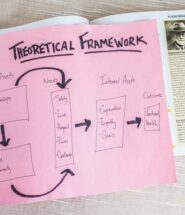
    A conceptual framework is the researcher’s idea on how the research problem will have to be explored. This is founded on the theoretical framework, which lies on a much broader scale of resolution. The theoretical framework dwells on time tested theories that embody the findings of numerous investigations on how phenomena occur.

    The theoretical framework provides a general representation of relationships between things in a given phenomenon. The conceptual framework, on the other hand, embodies the specific direction by which the research will have to be undertaken. Statistically speaking, the conceptual framework describes the relationship between specific variables identified in the study. It also outlines the input, process and output of the whole investigation. The conceptual framework is also called the research paradigm.

    Examples of the Theoretical and the Conceptual Framework
    The difference between theoretical framework and conceptual framework can be further clarified by the following examples on both concepts:

    Theoretical Framework: Stimulus elicits response.
    Conceptual Framework: New teaching method improves students’ academic performance.
    Notice in the illustrative example that the theoretical framework basically differs from the conceptual framework in terms of scope. The theoretical framework describes a broader relationship between things. When stimulus is applied, response is expected. The conceptual framework is much more specific in defining this relationship. The conceptual framework specifies the variables that will have to be explored in the investigation. In this example, the variable “teaching method” represents stimulus while the “students’ academic performance” represents the response. The variables make clear the kind of statistical treatment that will have to be used to analyze the relationship.

    How can students come up with their theoretical and conceptual framework?
    In order to come up with their own set of theoretical and conceptual framework that will guide the conduct of the research, students have to review literature pertaining to their chosen research topic. Students need to read a lot and find out what has been studied so far in their respective fields and come up with their own synthesis of the literature. They should look for gaps in knowledge and identify what questions need to be answered or what problems need to be given solutions. Thus, they will be able to formulate their own conceptual framework to serve as guide in their research venture.